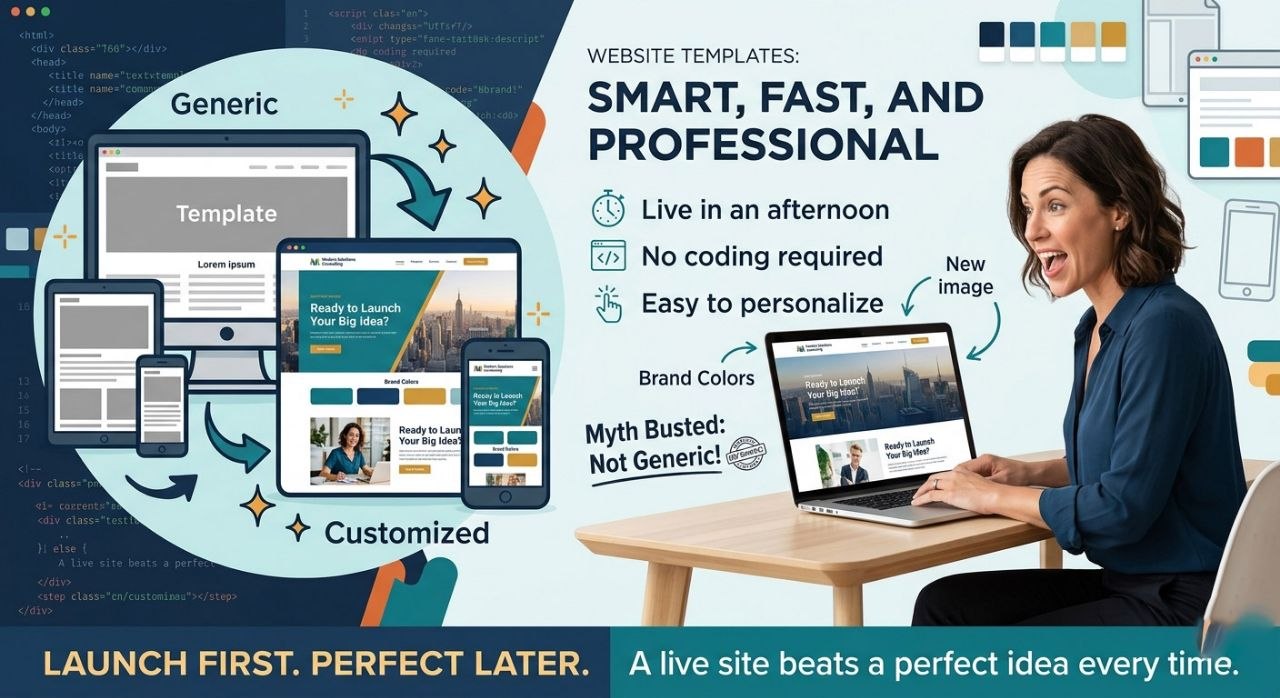
Your website is often the first impression customers have of your business. Whether you run a small local shop, an online store, a consulting agency, or a personal brand, the template you choose can directly affect how people perceive your professionalism, trustworthiness, and value.
With thousands of website templates available today, selecting the right one can feel overwhelming. A beautiful design alone is not enough the ideal template should align with your business goals, support your content, and create a seamless experience for visitors.
This guide breaks down everything you need to know before choosing a website template for your business.
Why Your Website Template Matters
A website template is more than just a design layout. It influences:
- User experience
- Mobile responsiveness
- Loading speed
- SEO performance
- Conversion rates
- Brand perception
The wrong template can make your business look outdated, confusing, or untrustworthy. The right one can improve engagement, increase leads, and help customers take action.
Step 1: Define Your Website Goals
Before browsing templates, identify what your website needs to accomplish.
Ask yourself:
- Are you selling products online?
- Generating leads?
- Showcasing a portfolio?
- Booking appointments?
- Sharing content through a blog?
- Building brand awareness?
Your goals determine the type of structure and features your template should include.
Examples
| Business Type | Recommended Focus |
|---|---|
| E-commerce Store | Product pages, checkout flow, reviews |
| Law Firm | Trust signals, contact forms, professionalism |
| Restaurant | Menus, reservations, gallery |
| Freelancer | Portfolio, testimonials, services |
| SaaS Company | Landing pages, demos, lead generation |

Step 2: Prioritize Mobile Responsiveness
More than half of web traffic now comes from mobile devices. A template that looks great on desktop but performs poorly on smartphones can hurt your business.
Choose a template that:
- Automatically adjusts to all screen sizes
- Loads quickly on mobile
- Uses readable fonts
- Has easy navigation
- Includes touch-friendly buttons
Always preview templates on mobile before making a decision.

Step 3: Keep Branding in Mind
Your website should reflect your brand identity consistently.
Look for templates that complement your:
- Brand colors
- Typography
- Industry style
- Tone of voice
- Visual personality
For example:
- A luxury brand may need elegant minimalism
- A creative agency may prefer bold visuals
- A financial company benefits from clean and professional layouts
Avoid choosing a template simply because it looks trendy.

Step 4: Focus on User Experience (UX)
A good template should help visitors find information quickly and easily.
Key UX elements include:
Clear Navigation
Menus should be simple and intuitive.
Readable Layouts
Avoid cluttered designs with excessive animations or text.
Strong Calls-to-Action
Templates should naturally guide visitors toward actions like:
- Contacting you
- Booking services
- Purchasing products
- Subscribing to newsletters
Fast Loading Speed
Heavy templates with unnecessary effects can slow your website down and increase bounce rates.
Step 5: Consider Customization Flexibility
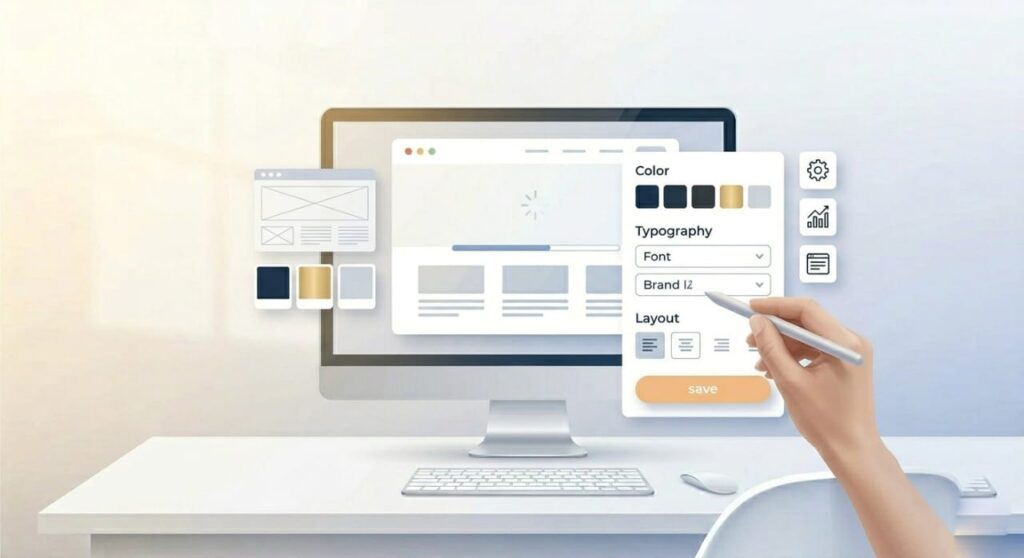
Your business will grow and evolve. Choose a template you can customize easily without needing to rebuild your site later.
Check whether the template allows you to:
- Change colors and fonts
- Rearrange sections
- Add new pages
- Integrate plugins or tools
- Update layouts easily
Flexible templates save time and money in the long run.
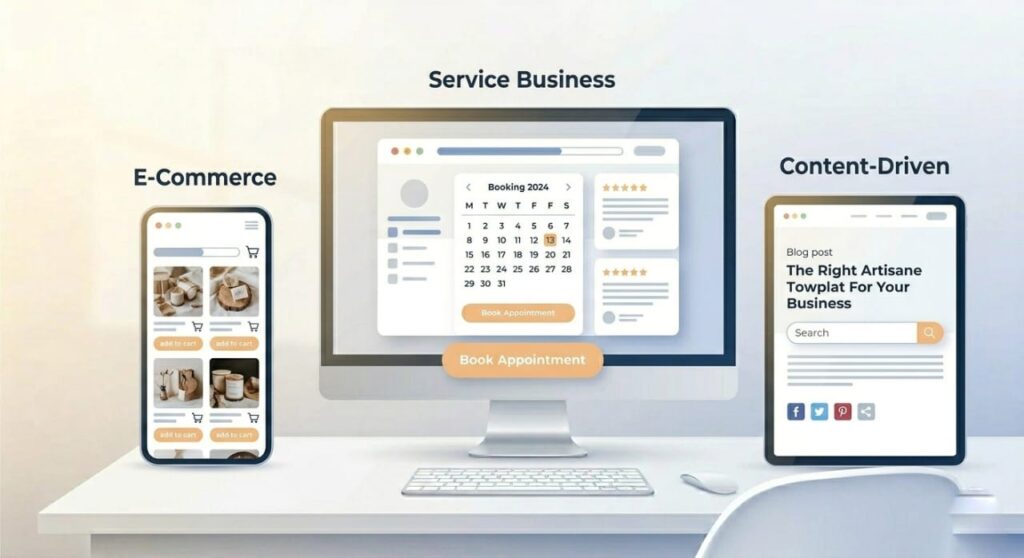
Step 6: Choose Industry-Specific Features
Different industries require different functionality.
E-Commerce Websites
Look for:
- Product galleries
- Secure checkout support
- Inventory integration
- Customer reviews
Service Businesses
Prioritize:
- Booking systems
- Contact forms
- Testimonials
- Service pages
Content-Driven Websites
Focus on:
- Blog layouts
- Search functionality
- Social sharing tools
- Readability
Industry-specific templates usually perform better because they are designed around customer expectations.
Step 7: Check SEO Friendliness
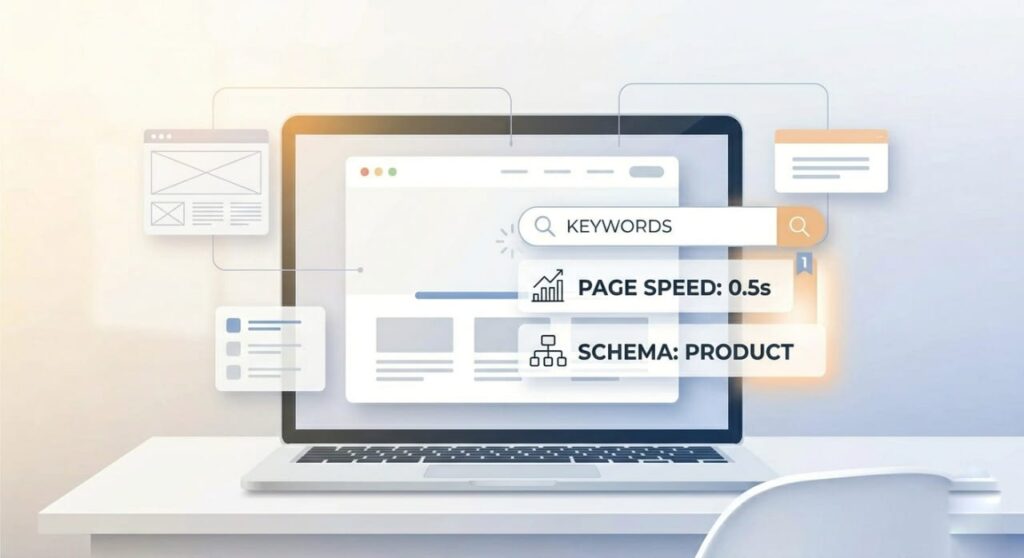
A visually appealing site means little if customers cannot find it online.
SEO-friendly templates should include:
- Fast loading performance
- Clean code structure
- Mobile optimization
- Proper heading hierarchy
- Schema support
- Image optimization capabilities
Templates overloaded with animations and scripts may negatively affect search rankings.
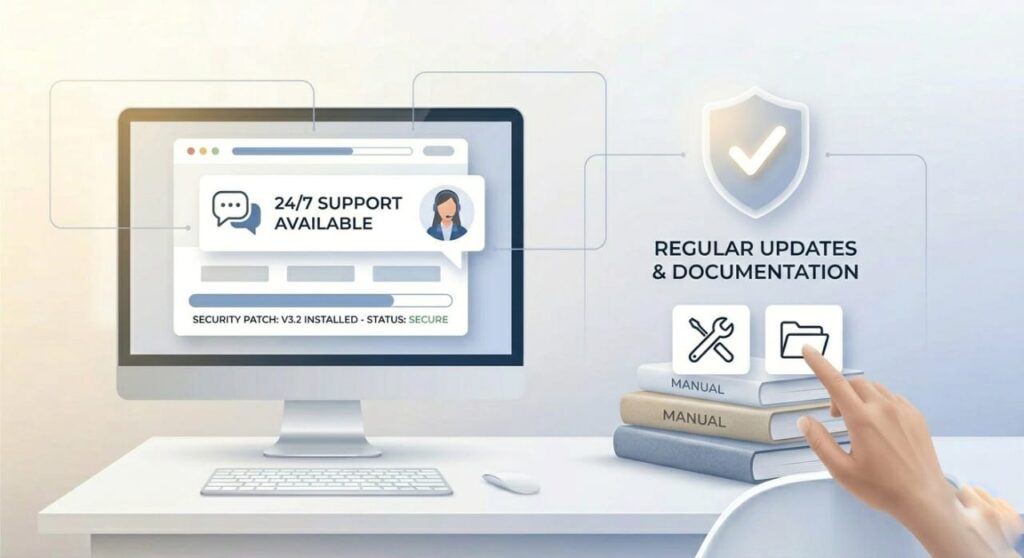
Step 8: Evaluate Support and Updates
Templates require occasional updates for:
- Security
- Compatibility
- Performance improvements
Choose templates from reputable developers that offer:
- Regular updates
- Technical support
- Documentation
- Tutorials
Free templates may save money initially but often come with limited support.
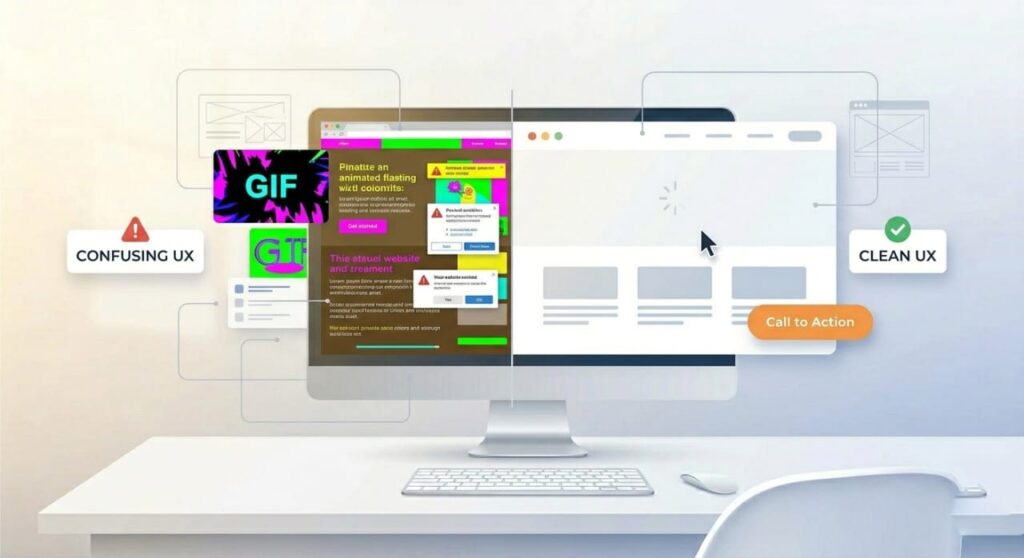
Step 9: Avoid Common Template Mistakes
Choosing Style Over Function
A flashy design that confuses users will hurt conversions.
Ignoring Scalability
Your template should support future growth and additional features.
Overcomplicating the Design
Simple, clean layouts usually outperform overly complex designs.
Not Testing Before Launch
Always test:
- Mobile responsiveness
- Page speed
- Browser compatibility
- Contact forms
- Navigation

Step 10: Think Long-Term
Your website is an investment. Rebuilding an entire website later can be expensive and time-consuming.
Select a template that can grow with your business and remain visually relevant for years.
Timeless design elements usually outperform short-lived design trends.
Signs You’ve Found the Right Template
You’ve likely found the right template if it:
- Matches your brand identity
- Looks professional on all devices
- Loads quickly
- Is easy to navigate
- Supports your business goals
- Allows future customization
- Encourages customer action
Final Thoughts
Choosing the right website template is one of the most important decisions in building your online presence. The ideal template balances aesthetics, functionality, speed, usability, and scalability.
Instead of chasing trends, focus on what serves your audience best. A clean, user-friendly website that clearly communicates your value will always outperform a complicated design that prioritizes appearance over experience.
The right template doesn’t just make your business look good it helps your business grow.